


Used vs. New Tires in Lubbock: Is Buying Used Ever Worth It?
You notice used tires listed for $25-$50. They appear in good shape and cost much less than a new set. It’s easy to see why these deals attract attention.
Are they really a bargain, or could they cost more than they’re worth?
In Lubbock, finding budget-friendly used tires isn’t difficult. From Facebook Marketplace to neighborhood tire shops, affordable options are everywhere. The real challenge is knowing whether a tire is actually worth buying. Whether you’re shopping online or visiting a tire shop in Lubbock, TX, understanding what to look for before making a purchase can help you avoid costly mistakes.
Let’s look at the situations where buying used is a smart move, the risks that are easy to miss, and what to check before handing over your money.
Why Buying Used Tires Sometimes Makes Sense
There’s a reason used tires remain a popular option in Lubbock. They typically cost 30% to 50% less than new tires, making them an appealing choice for drivers trying to manage their budget without putting their plans on hold.
Price matters, but so does the reason you’re buying the tire. In the right situation, a used tire can be a practical option.
Buying used is often worth considering if:
- You’re planning to sell or trade your vehicle soon: Spending hundreds of dollars on a brand-new set may not make financial sense if the vehicle won’t be on the road much longer.
- You need one matching tire: Replacing a single damaged tire with one that closely matches the remaining tread can help maintain balanced handling until the full set needs to be replaced.
- You come across nearly-new take-off tires: tires removed from new vehicles after owners upgrade their wheels or tire size. If they’re the correct size, recently manufactured, and in excellent condition, they can offer exceptional value.
- You need a short-term solution: If buying new tires isn’t possible today, a carefully inspected used tire can help keep your vehicle safely on the road while you save for a new set.
However, if your situation doesn’t match these examples, savings can disappear quickly, especially with hidden damage or reduced tire life.
The Real Risks (and Why Lubbock Makes Them Worse)
A used tire may look like a great deal, but looks can be deceiving. Unlike a new tire, you’re buying something with an unknown history, and some problems simply aren’t visible during a quick inspection.
Here are some of the biggest risks to keep in mind:
- Unknown history: Unless the seller has service records, there’s no way to know whether the tire has been driven while underinflated or overloaded, hit a pothole, or been repaired after a puncture.
- Hidden damage: Internal belt separation or sidewall damage isn’t always visible from the outside, even if the tread looks good.
- Limited warranty protection: Most used tires are sold “as is,” leaving you responsible if something goes wrong after the purchase.
One factor, however, deserves special attention: the tire’s age.
Don’t Overlook the Tire’s Age
Many buyers focus on tread depth, but tread tells only part of the story.
Rubber naturally hardens over time, even if the tire hasn’t been driven much. In Lubbock, prolonged heat and dry air can accelerate that aging process by 20% to 30% compared to cooler climates, making older used tires a bigger gamble. It’s the same reason Lubbock heat ages tires faster than most drivers expect.
That’s why a tire with deep tread isn’t always the safer choice. A newer tire with slightly less tread can often have a longer remaining service life.
Pro Tip: Tread depth tells you how much a tire has been used. It tells you nothing about how old it is. In Lubbock’s heat, age matters just as much as tread. Always check the DOT date code before buying a used tire.
How to Inspect a Used Tire Before You Buy
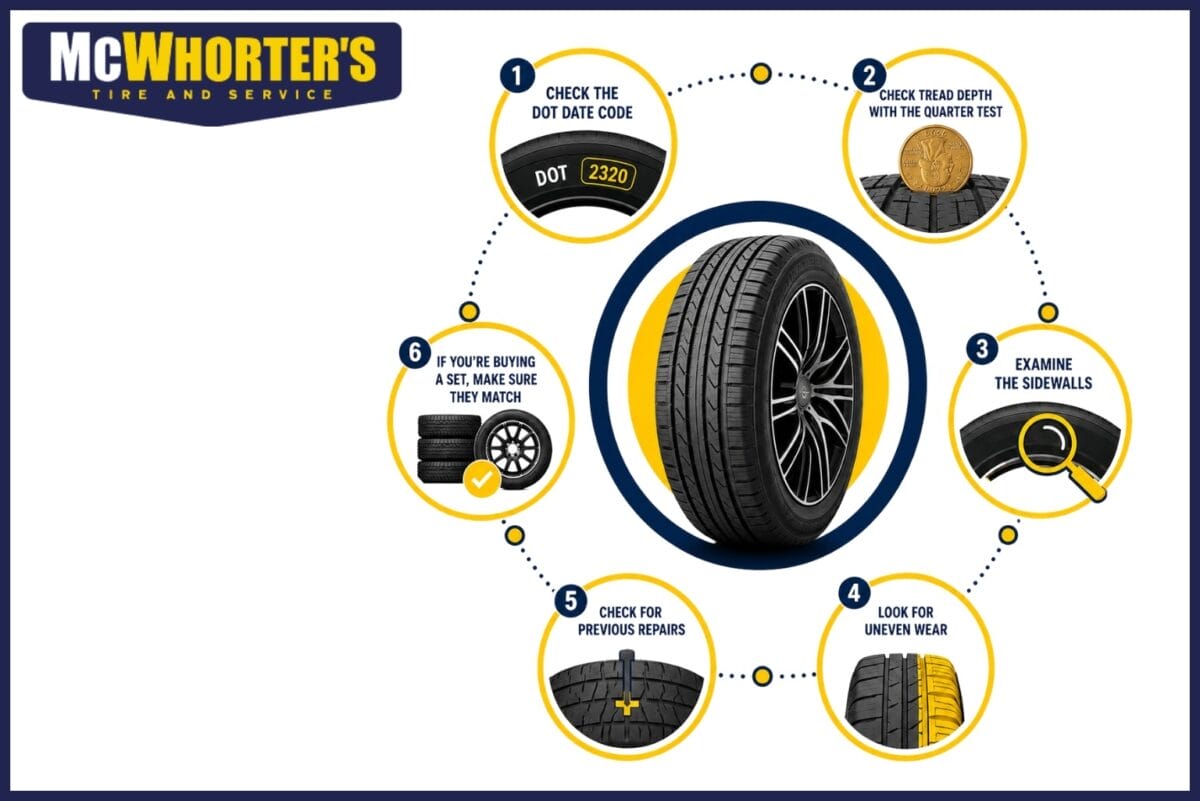
A used tire isn’t necessarily a bad purchase, but it deserves a closer look before you hand over your money. A five-minute inspection can tell you far more than a seller’s description ever will.
1. Check the DOT Date Code
Every tire has a DOT code stamped on its sidewall, and the last four digits tell you when it was made. The first two of those digits represent the week, and the last two indicate the year. For example, 2320 means the tire was made in the 23rd week of 2020.
As a general rule, avoid buying tires that are more than six years old, even if the tread looks almost new. In Lubbock’s hot, dry climate, older rubber can deteriorate faster than it appears.
2. Check Tread Depth with the Quarter Test
Don’t rely on appearance alone. Use the quarter test to check the remaining tread depth. While a tire is legally worn out at 2/32 inch, many tire professionals recommend replacing it once it reaches 4/32 inch, especially if you’ll be driving in wet conditions.
3. Examine the Sidewalls
Look closely for cracks, bulges, cuts, or signs of dry rot. Then run your hand along the sidewall to feel for any irregularities. Even minor damage can weaken the tire and shorten its remaining life.
4. Look for Uneven Wear
If one side of the tread is more worn than the other, it could point to past alignment or suspension problems. Uneven wear also means the tire may not perform as expected, even if there’s plenty of tread left.
5. Check for Previous Repairs
Ask whether the tire has been repaired and inspect it carefully for plugs or interior patches. A professionally repaired puncture in the tread area may be acceptable, but multiple repairs or damage near the sidewall are good reasons to walk away.
6. If You’re Buying a Set, Make Sure They Match
All four tires should be the same size, type, and, ideally, the same brand and model. Mixing different tires can affect handling, braking, and overall driving performance.
Pro Tip: If a seller can’t or won’t let you check the DOT date code and inspect the sidewalls in good light, you’ve already got your answer. Walk away.
The True Cost Comparison
A $40 used tire can seem like an easy way to save money. But before deciding, it’s worth looking beyond the price tag.
Before buying, ask yourself four simple questions:
How old is the tire?
Even deep tread won’t undo years of exposure to Lubbock’s heat.
Does it come with a warranty?
Most used tires don’t, which means you’re responsible if something goes wrong.
How much life is really left?
A tire that’s already halfway through its lifespan may need replacing much sooner than a new one.
Will you save money in the long run?
If a used tire fails or reaches the end of its service life sooner than expected, you’ll likely pay for another tire, another installation, and another balancing service. What initially looked like a bargain can quickly become the more expensive choice.
Find the Right Tires for Your Budget at McWhorter’s Tire and Service
By now, you’ve probably realized there’s no one-size-fits-all answer. Some drivers genuinely benefit from buying used, while others are better off investing in a new set. The right choice depends on your vehicle, your driving habits, and your budget.
McWhorter’s Tire and Service has helped Lubbock drivers make informed decisions about tires for years. Whether you’re replacing a single tire, comparing new options, or deciding if a quality used tire is the right short-term solution, the team will recommend the option that best fits your vehicle, budget, and driving needs.
A good tire saves money. The right tire gives you peace of mind.
Visit McWhorter’s Tire and Service store at these locations and make a confident decision.
Frankford Avenue: (806) 785-7185
Texas Avenue: (806) 630-1403