


Cracked Tire Sidewalls in Lubbock: When to Worry and When Not To
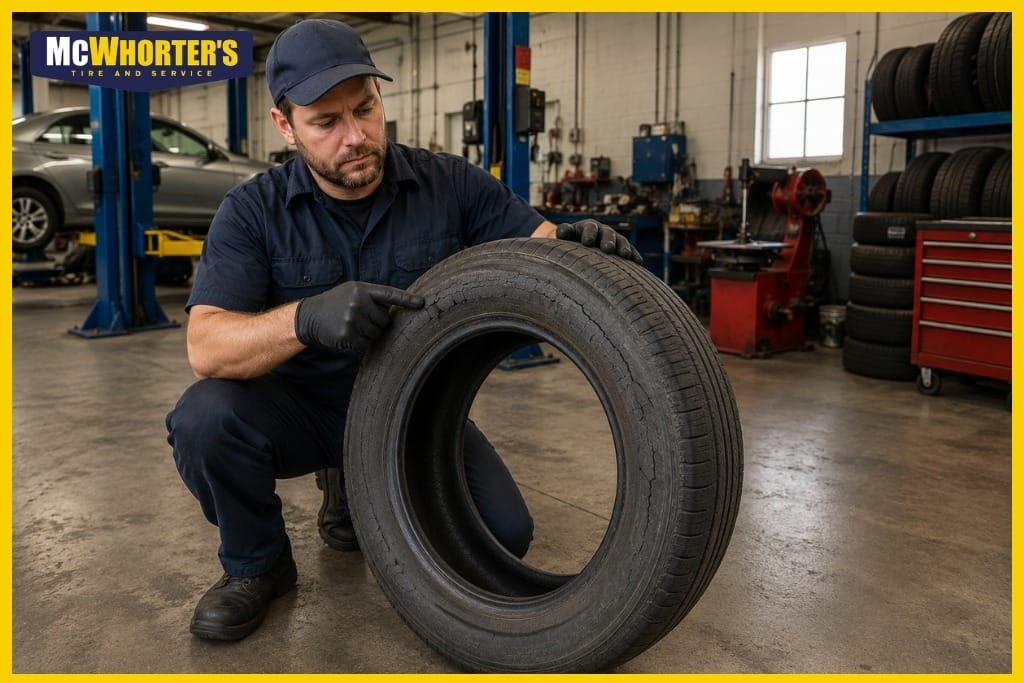
A particular kind of tire damage often gets noticed by accident. You are walking past your vehicle, checking the pressure or simply giving the tires a quick look, when you spot fine lines running across the sidewall.
They may look harmless. Then you look closer and wonder: How deep are those cracks? Is this tire still safe to drive on?
The answer is not always as alarming as it first seems. Some sidewall cracking is limited to the surface and is mostly cosmetic. Deeper cracks, however, can signal that the rubber is deteriorating and the tire needs attention.
Lubbock’s climatic conditions can speed up this aging process. Whether you are checking the tires at home or comparing Lubbock tire shops for a professional inspection, knowing how to judge the condition of a cracked sidewall can help you make a more informed decision.
This guide will show you how to tell the difference between surface cracking and a tire that should come off the road, along with what you can do to slow the damage down.
What Those Cracks Actually Are
Not every crack means the same thing, and the terminology can make the subject sound more complicated than it is.
- Weather checking generally refers to fine, shallow lines that appear on the rubber surface. They are often an early sign of environmental aging.
- Weather cracking is a broader term for cracking caused by exposure and rubber deterioration. As the cracks become deeper or more widespread, they deserve more attention.
- Ozone cracking is specifically associated with ozone attacking the rubber. Ozone exposure can contribute to the small cracks that develop on exposed tire surfaces.
These terms describe related forms of rubber aging. As a tire’s protective oils and anti-aging compounds become less effective, the rubber becomes more vulnerable to sunlight, heat, and ozone.
Why Lubbock Eats Sidewalls Faster
Prolonged sun exposure can damage tire rubber. A vehicle parked outside for hours at a time is exposed to intense UV radiation and heat while sitting still. Repeated exposure can gradually weaken the protective compounds in the rubber, leaving the sidewall more vulnerable to drying, hardening and cracking.
The outward-facing sidewall usually takes the brunt of that exposure. Check both sidewalls when inspecting the tires. If the outward-facing side has noticeably more cracking while the inward-facing side remains in better condition, that difference can be a useful clue that sun exposure is contributing to the damage.
Cosmetic vs. Structural: How to Actually Tell
This is where looking at the tire properly matters.
You do not need to become a tire expert overnight. Start with three things: depth, location, and feel.
Shallow Surface Cracks: Usually Monitor
Cracking is more likely to be limited to the surface when:
- The lines are fine and shallow.
- They are difficult to feel with your fingertip.
- The rubber still feels flexible.
- The cracking is mainly on the outward-facing sidewall.
- There is no bulge or obvious distortion.
- The rest of the tire appears to be in good condition.
This kind of weather checking becomes more common as tires age. Tires in service for three or four years or more may show surface cracking, although age alone does not determine whether a tire is safe.
Think of this category as “pay attention, but don’t panic.”
Deeper Cracks: Time for an Inspection
The situation deserves a closer look when:
- A crack is deep enough to catch your fingernail.
- Cracking covers a large section of the sidewall.
- The black rubber has begun to look gray or ashy.
- The rubber feels unusually hard or brittle.
- Cracks are appearing in several areas rather than as a few isolated lines.
At this stage, it is better to have the tire assessed rather than decide based on appearance alone.
Cracks Into the Structure: Stop Driving
Some signs are more concerning.
Do not continue driving on the tire if:
- A crack exposes material of a different color beneath the black rubber.
- Cracking has reached the lower sidewall or bead flex zone.
- The sidewall has a bulge or bubble.
- Other obvious signs of structural damage are present.
A bulge is particularly important because it can indicate damage to the tire’s internal structure.
Pro Tip: Run a fingernail across the crack. If it barely catches and the rubber still feels supple, it is more likely to be surface weather checking. If your nail sinks into the crack or you can see a different-colored material underneath, the damage may have reached deeper into the tire. That is a tire you should stop driving on and have inspected.
Why You Can’t Just Repair a Cracked Sidewall
A puncture in the tread and damage to the sidewall are not interchangeable problems. A suitable tread puncture may sometimes be repairable, and understanding the difference between tire repair and flat-tire service can help determine what can actually be fixed.
A damaged sidewall generally is not repairable because the sidewall is part of the tire’s flexible structural system. A patch cannot restore compromised sidewall rubber in the same way a proper puncture repair can address certain tread damage.
If the cracks are shallow, the answer is prevention and monitoring. If they have reached the tire’s structure, the answer is replacement. No cosmetic product can change that distinction.
How to Slow Sidewall Cracking in Lubbock
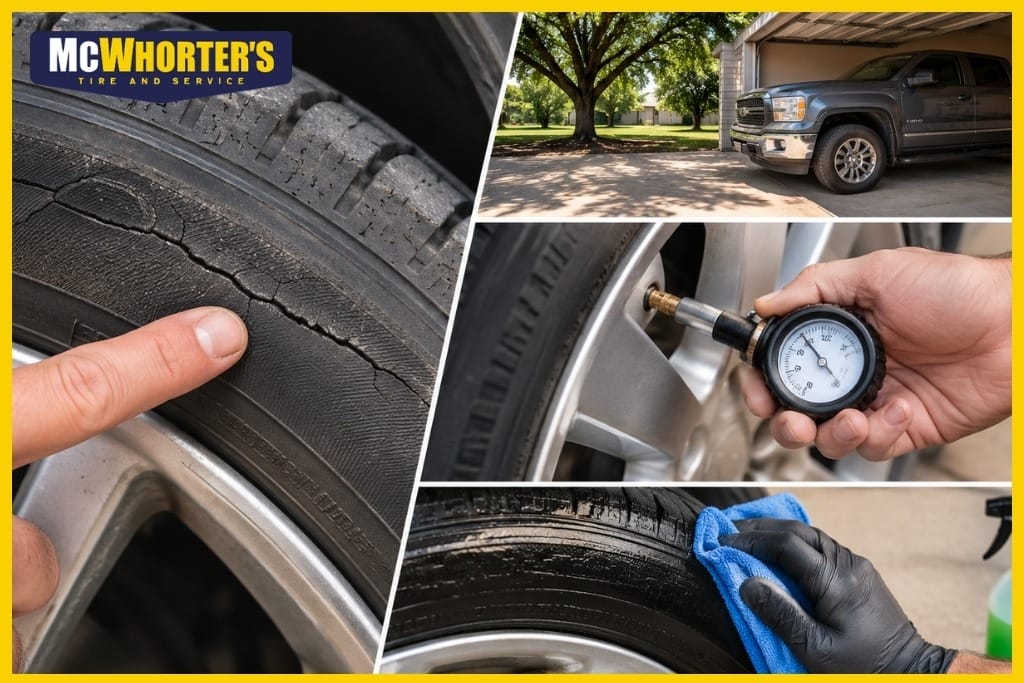
You cannot stop a tire from aging, but you can make its environment a little easier.
Park in the Shade
If a garage is available, use it. Otherwise, choose shade whenever practical. Reducing direct UV exposure is one of the simplest ways to reduce the environmental stress placed on the sidewall.
Keep the Tires Properly Inflated
Underinflation makes a tire flex more as the vehicle moves. That extra flex creates additional heat and stress in the sidewall.
Check tire pressure regularly and use the vehicle manufacturer’s recommended pressure rather than judging inflation by appearance.
Be Careful With Tire Shine
A tire does not need to look wet and glossy to be healthy.
For routine cleaning, mild soap and water are a sensible choice. If using a tire dressing, choose one intended for tire rubber and follow the manufacturer’s instructions. Avoid products that contain petroleum distillates or are not recommended for tire use.
Pro Tip: That glossy tire shine may make an old sidewall look brand new for an afternoon, but it cannot undo cracking. In Lubbock’s sun, protecting the tire from excessive exposure and maintaining proper inflation will do far more for its long-term condition.
Do Not Let a Vehicle Sit Forever
A seldom-used second car or truck can still develop tire-aging problems. Low mileage does not mean the rubber has stopped aging.
If a vehicle is rarely driven, check its tires regularly and move the vehicle periodically rather than letting it sit for months in the same spot.
Keep Tires Away From Ozone Sources
Sun and heat are not the only environmental factors that can age rubber. Ozone can also contribute to cracking, particularly around equipment that produces electrical arcing.
If a vehicle is regularly parked in a garage, barn or workshop where welding equipment or similar machinery is being used, avoid keeping the tires directly beside the equipment when possible.
Check the DOT Date
Look at the DOT code on the sidewall to determine when the tire was manufactured. Older rubber deserves closer attention, particularly if cracking is already visible.
And remember: a healthy-looking tread does not tell you everything about a tire’s condition. The sidewalls and the rubber’s age matter too.
Get a Straight Answer at McWhorter’s Tire and Service
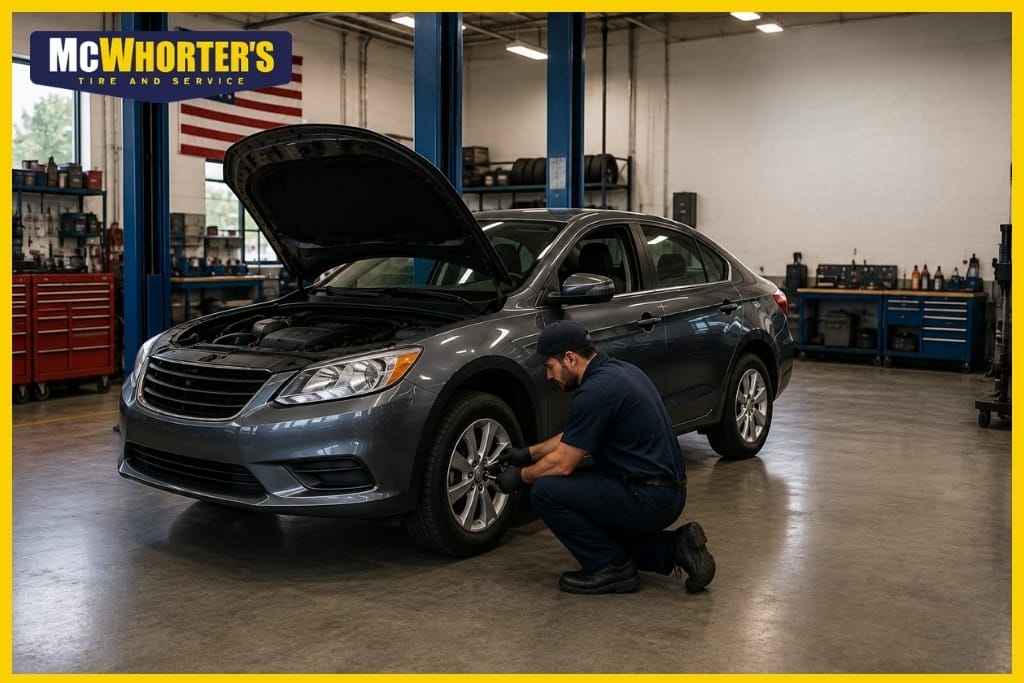
If you have looked closely at the sidewall and still cannot tell whether those cracks are harmless surface lines or something more serious, it is better to get a clear answer from a trusted Lubbock tire shop than to keep guessing.
Bring the vehicle to McWhorter’s Tire and Service for a professional inspection. If the cracking is only cosmetic, you can have peace of mind without replacing a tire unnecessarily. If the damage has reached the tire’s structure, finding it early gives you the chance to address it before it becomes a roadside problem.
From sidewall cracking to other common tire concerns in Lubbock, knowing what to look for can help you catch problems before they get bigger.
Not every crack calls for a new tire, but every serious crack deserves a closer look. When in doubt, inspect it before the road decides for you.
Ready to know where your tires stand? Visit either McWhorter’s Tire and Service location for a professional inspection.
- Frankford Avenue: 5807 Frankford Ave, Lubbock, TX 79424, 806-785-9666
- Texas Avenue: 1008 Texas Ave, Lubbock, TX 79401, 806-762-0231