


Tire Pressure Light On in Cold Weather? Why It Goes Off Later
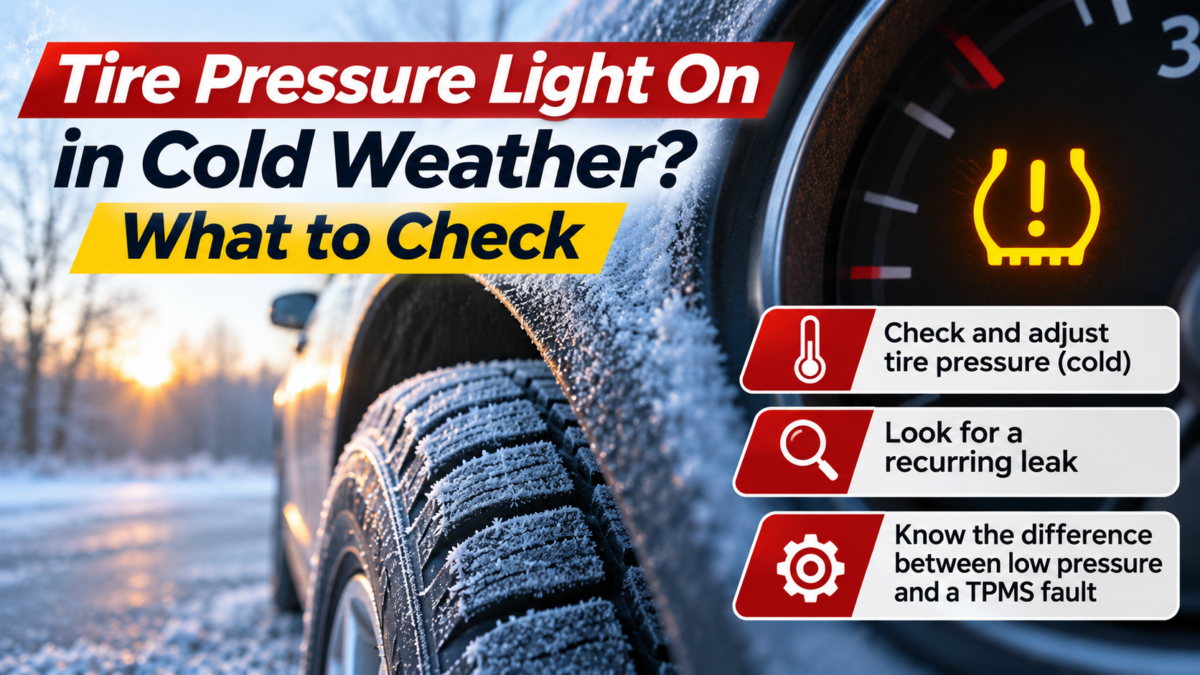
Your tire pressure light is on when you leave home, then disappears partway through the drive. The tires do not look flat, and the vehicle feels normal. It is tempting to blame the weather and forget about it.
Cold weather can trigger that pattern, but the warning still deserves a pressure check. Air pressure falls as tires cool and rises as they warm. A tire that is already low can cross the warning threshold overnight, then rise above it during the drive. The light going out does not confirm that its cold pressure is correct or that it has no leak.
Why a cold morning can bring the light on
A useful approximation is a change of about 1 psi for every 10°F change in temperature. A drop from a mild afternoon to a much colder morning can therefore affect a tire that was already close to the system’s warning threshold.
This matters beyond snowy climates. Drivers in Kansas and Nebraska may first notice the warning after a cold front. In Lubbock or Guymon, a warm afternoon does not tell you what the pressure will be before the next morning’s drive. In Colorado, a warm garage can also make a reading less representative of the colder conditions outside.
The solution is to measure the pressure and use the vehicle’s specified cold inflation target. Do not add an arbitrary amount simply because winter has arrived.
Check the pressure before trying to reset the light
Make the first check with a reliable gauge. A tire can be underinflated without visibly looking low.
- Find the recommended cold tire pressures on the driver’s door placard or in the owner’s manual. Front and rear specifications may differ.
- For a cold reading, check after the vehicle has been parked for at least three hours.
- Measure every road tire and write down the readings. Check the spare according to its own specification, if your vehicle has one.
- Adjust the tires to the applicable vehicle specification and recheck with the gauge.
The number molded onto a tire’s sidewall is not the vehicle’s recommended everyday inflation target. If the tire size has been changed from the original fitment, have a qualified tire professional confirm the appropriate pressure.
Do not bleed air from warm tires just to make their readings match the cold specification. Heat from driving changes the reading. The same relationship also explains why summer driving puts additional stress on tires.
Weather change or slow leak? Look for a pattern
A similar decrease across several tires following a temperature drop is consistent with a weather-related change. One tire repeatedly falling below the others deserves closer inspection. These are useful clues, not a diagnosis.
For example, suppose you correct all four pressures on a cold morning. A few days later, under similar conditions, three remain near their targets while one has dropped again. Tell the shop which tire lost pressure and how quickly. A puncture, valve leak, or problem where the tire seals against the wheel may need attention.
Use the same gauge and compare readings under similar cold conditions. Comparing a reading taken after a highway drive with one taken before breakfast can make normal temperature effects look like air loss.
Repeatedly adding air without finding the cause leaves the problem unresolved. A recurring warning deserves inspection even if warmer afternoons temporarily make it disappear.
A flashing TPMS light means something different
A low-pressure warning and a monitoring-system fault require different checks. On many vehicles, a TPMS light that flashes for roughly a minute and then stays illuminated indicates a malfunction in the monitoring system.
A failed sensor battery, damaged sensor, or communication problem may be involved. You still need to check the actual pressures, because a malfunctioning system cannot be relied on to warn you correctly.
If the pressures are correct but the warning remains, consult the owner’s manual for the vehicle’s reset or relearn procedure. Some systems update after driving; others require a specific procedure. Do not repeatedly reset the system to hide a warning. Persistent or flashing warnings call for TPMS diagnosis and service.
What if the warning appears during your drive?
Stop somewhere safe to inspect the tires and check pressure as soon as practical. Do not continue driving on a visibly flat tire or one that cannot hold air. A rapid pressure drop, new pulling, thumping, or vibration warrants prompt attention rather than waiting for warmer weather.
If a tire is low after driving, address the low pressure instead of postponing action solely because it is warm. Recheck and fine-tune the pressure when the tire is cold. If you cannot safely check or inflate it, arrange assistance.
Cold-weather tire pressure FAQs
Do I need winter tires because the pressure light came on?
The warning alone does not tell you which tire category you need. Correct the inflation issue first. Seasonal tire selection is a separate decision based on your vehicle, routes, and expected road conditions.
Why did the light appear shortly after a tire rotation?
Some vehicles require a sensor relearn or system calibration after service. Vehicles with different front and rear pressure targets also need the pressures adjusted for the tires’ new positions. Have the pressures and required procedure checked.
Should I trust the dashboard display or my gauge?
Some dashboard readings update only under certain operating conditions. Start with a reliable gauge and follow the owner’s manual. A persistent difference between the display and gauge is worth discussing with the shop.
How often should I check if the warning stays off?
Check at least monthly and before a long trip. Add a check after a substantial temperature change. TPMS is a warning system, so waiting for its light is not a replacement for routine pressure checks.
Bring the pressure readings, not just the warning light
When contacting a Nebraskaland, Kansasland, Coloradoland, or McWhorter’s Tire and Service shop, describe whether the light stays on, goes out as you drive, or flashes first. Share any repeated pressure loss and recent tire work. Find your nearest shop to arrange help with the tire or monitoring system that needs attention.